

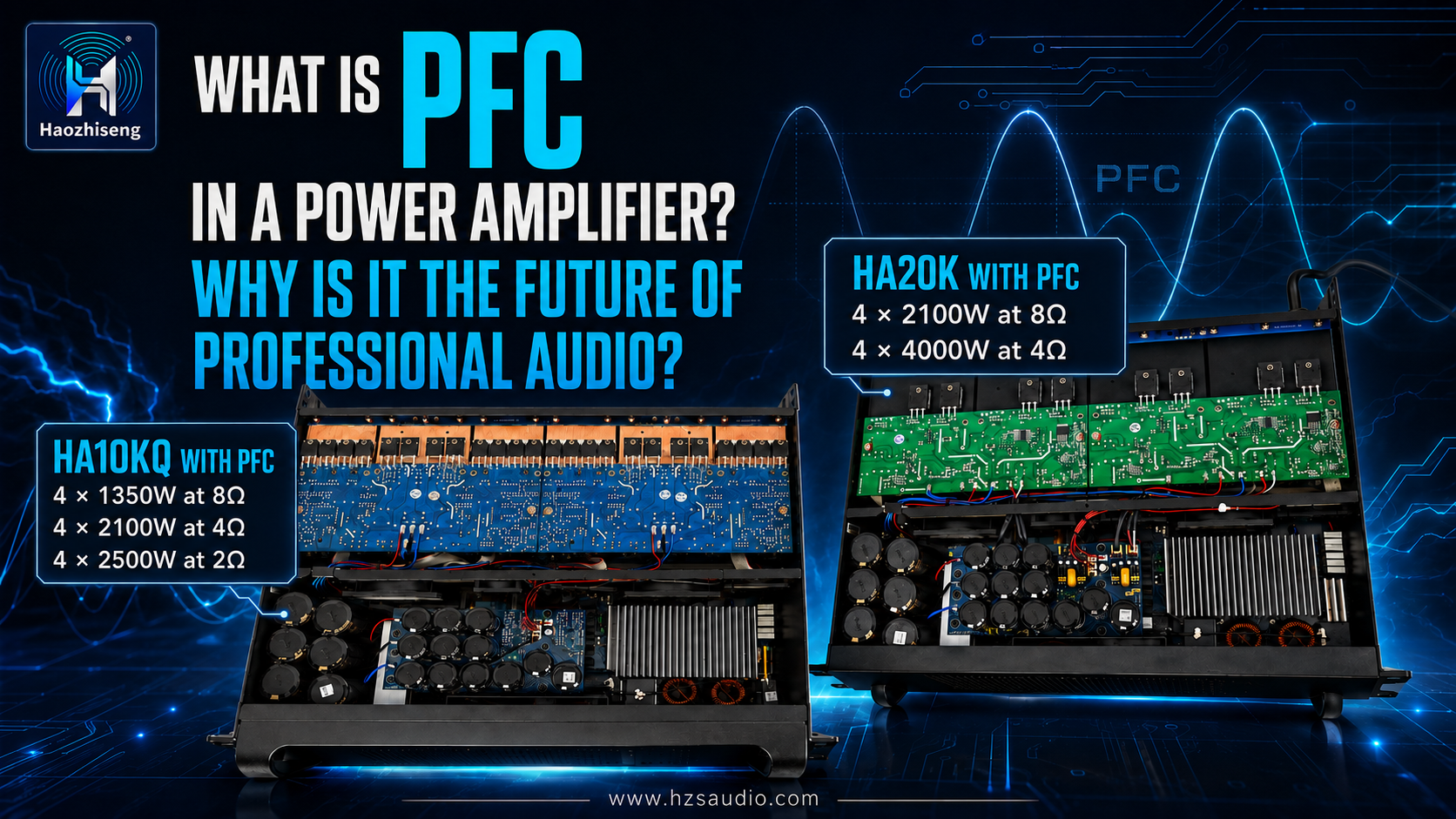
What Is PFC in a Power Amplifier—and Why Is It the Future of Professional Audio?
When choosing a professional power amplifier, most buyers compare output power, channel count, sound quality and 2-ohm performance. However, one of the most important parts of an amplifier is often overlooked: its power supply.
At concerts, outdoor festivals, nightclubs and touring events, an amplifier may not be connected to a perfect utility grid. It may have to operate from a long power cable, a temporary distribution panel, a generator or a mains supply with frequent voltage fluctuations. Under these conditions, power-supply design can directly affect the stability of the entire sound system.
This is why PFC—Power Factor Correction—is becoming increasingly important in modern professional amplifiers. When combined with a wide-voltage switch-mode power supply, PFC can improve power utilization, reduce stress on cables and generators, simplify international deployment and help the amplifier operate more reliably in demanding environments.
A powerful amplifier is not defined only by how much power it sends to the loudspeakers, but also by how efficiently and reliably it receives power from the mains.
What Does PFC Mean in a Power Amplifier?
PFC stands for Power Factor Correction. It is a power-supply technology designed to improve how electrical energy is drawn from the AC mains.
Power factor describes the relationship between real power—the energy that performs useful work—and apparent power—the total electrical load placed on the supply. A power factor closer to 1 means that the available electrical power is being used more effectively.
Conventional rectifier-based power supplies can draw current in short, high peaks instead of following the AC voltage waveform smoothly. Active PFC controls the input current so that it follows the mains voltage more closely. This can reduce unnecessary current peaks, harmonic current and stress on the upstream electrical system.
For a professional sound system, the practical advantages can include:
- Lower RMS input current for the same real power
- Reduced power-cable heating and transmission losses
- Less voltage drop across long power cables
- Better utilization of generators and temporary power distribution
- More stable operation when several high-power amplifiers share the same supply
- A stronger electrical foundation for high-output amplifier performance
PFC does not directly increase an amplifier’s rated output power, and it is not a substitute for correctly designed power distribution. Its value is that it allows the amplifier and the electrical supply to work together more efficiently.
Is PFC the Same as a Wide-Voltage Power Supply?
No. PFC and wide-voltage operation are related, but they are not the same feature.
PFC improves the input power factor and controls how current is drawn from the mains. A wide-voltage power supply allows the amplifier to operate across a broad AC input-voltage range, such as 90–265V AC or 100–240V AC, depending on the model.
Modern active-PFC circuits are often combined with high-efficiency switch-mode power supplies. This makes it possible to build amplifiers that can be used in markets with 110V, 120V, 220V, 230V or 240V mains power without producing separate voltage versions.
The two technologies complement each other:
- PFC improves the quality and efficiency of the amplifier’s power draw.
- Wide-voltage capability improves compatibility with different power grids.
The exact operating range and maximum output available at different input voltages should always be confirmed in the specifications of each model. At a lower mains voltage, the electrical circuit must supply more current to deliver the same power, so branch-circuit capacity remains important.
What Customer Pain Points Can PFC and Wide-Voltage Technology Solve?
The value of PFC is easiest to understand through the real problems encountered by distributors, rental companies, touring engineers and system integrators.
1. Different Mains Voltages Around the World
Traditional amplifiers may require separate 110V and 220V versions. A wide-voltage amplifier can serve more international markets with one model, simplifying purchasing and reducing the risk of ordering or connecting the wrong version.
2. Low or Fluctuating Venue Voltage
Temporary distribution systems, undersized cables and heavily loaded circuits can cause voltage drops. A properly designed PFC wide-voltage power supply provides greater operating flexibility within its specified input range and helps reduce unexpected shutdowns or restarts.
3. Generator-Powered Events
Outdoor festivals, mobile DJ systems and temporary stages often depend on generators. PFC improves the amplifier’s input-current characteristics, helping the generator and power-distribution system operate more effectively.
A stable and correctly sized generator with sufficient headroom is still required.
4. Long Power Cables
Large venues and outdoor sites may require long cable runs between the distribution panel and amplifier racks. Higher current increases cable heating and voltage loss.
By reducing RMS input current for the same real power, a high-power-factor amplifier can help reduce cable losses and improve voltage conditions at the amplifier rack.
5. Multiple High-Power Amplifiers
Large touring and concert systems often operate many amplifiers simultaneously. Poor power factor and excessive current peaks can place unnecessary stress on distribution circuits and generators.
PFC helps reduce this upstream electrical stress and supports more predictable system planning.
6. Complicated Inventory Management
Distributors may need to stock separate 110V and 220V amplifier versions. This increases inventory cost, complicates forecasting and creates a greater risk of shipping errors.
A wide-voltage platform simplifies purchasing, inventory management and after-sales service.
7. International Touring
A wide-voltage amplifier rack can be used more easily in different countries and regions. This reduces the need to change equipment when a touring system moves between 110V and 220–240V markets.
8. Limited Rack Space and High Freight Costs
PFC is commonly combined with switch-mode power supplies and Class D amplifier stages. These technologies support compact, lightweight and high-power-density amplifier designs, reducing rack space and transportation costs.
Why Are PFC Amplifiers Becoming a Major Industry Trend?
Professional audio is becoming more global, more powerful and more mobile. Manufacturers want one amplifier platform for multiple regions, touring companies want lighter racks with more output, and outdoor events need amplifiers that can work efficiently with generators and temporary power distribution.
Buyers are also looking beyond the initial purchase price. Rack space, freight, cabling, generator capacity, inventory and after-sales service all contribute to the total operating cost of an amplifier system.
A well-designed PFC wide-voltage amplifier can create value throughout the complete product lifecycle.
High output will always matter, but predictable operation matters just as much. As amplifier power continues to increase, managing input power efficiently will become as important as delivering output power cleanly.
For these reasons, PFC is moving from a premium specification toward an essential feature in the next generation of professional power amplifiers.
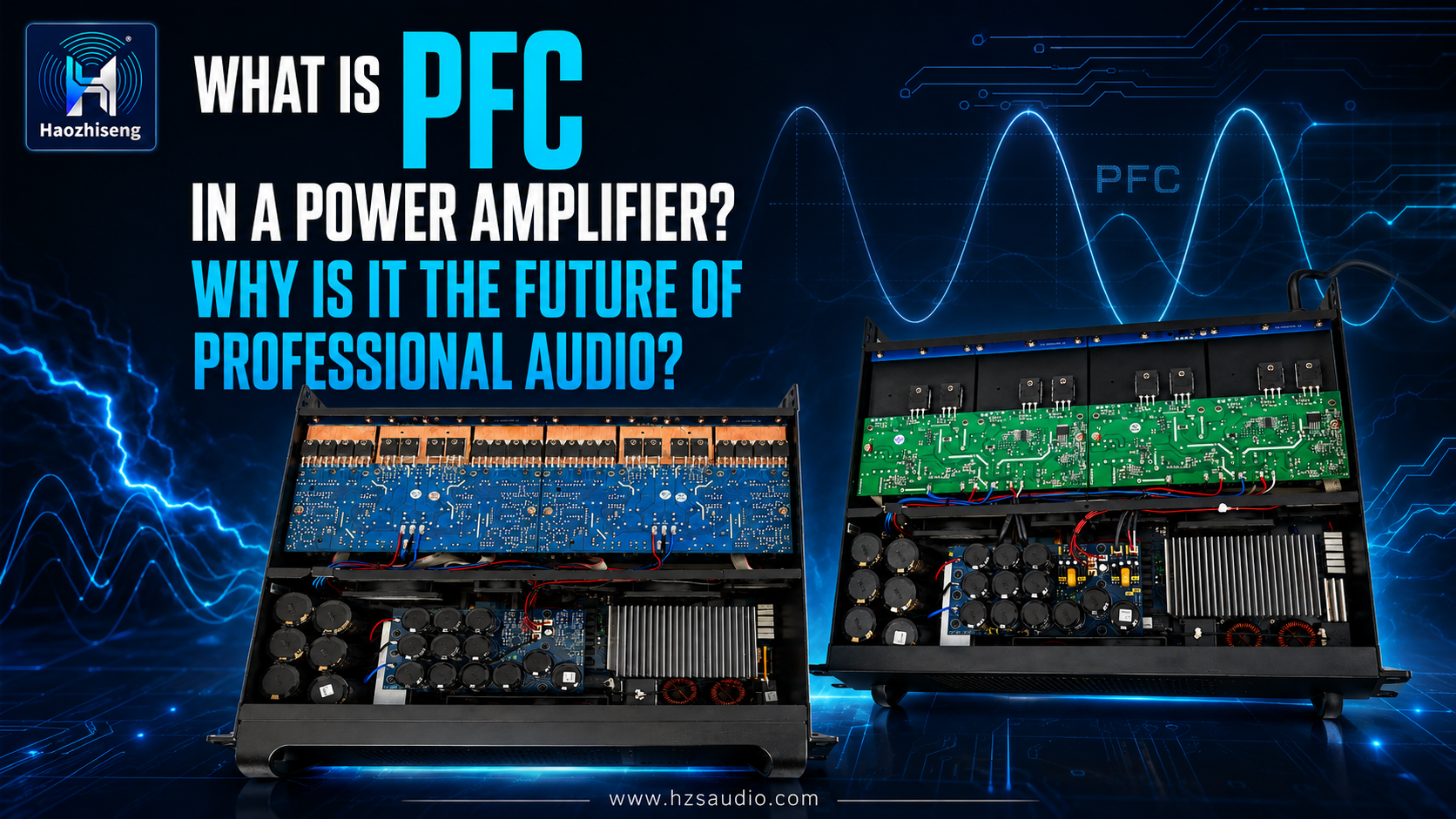
Six Haozhiseng Audio PFC Power Amplifiers
Haozhiseng Audio offers six PFC-equipped professional power amplifiers for touring, rental, concerts, nightclubs, line-array systems, professional subwoofers and fixed installations.
Quick Product Selection Guide
- HA10KQ: Four-channel Class TD amplification
- HA20K: High-output four-channel PA amplification
- HAX12 PRO: Integrated DSP and Ethernet network control
- HA1804: High four-channel output in a compact 1U chassis
- HA32K4: Extreme-output professional subwoofer amplification
- HA2402: Concentrated two-channel power in a compact 1U chassis
1. HA10KQ Four-Channel Class TD Power Amplifier
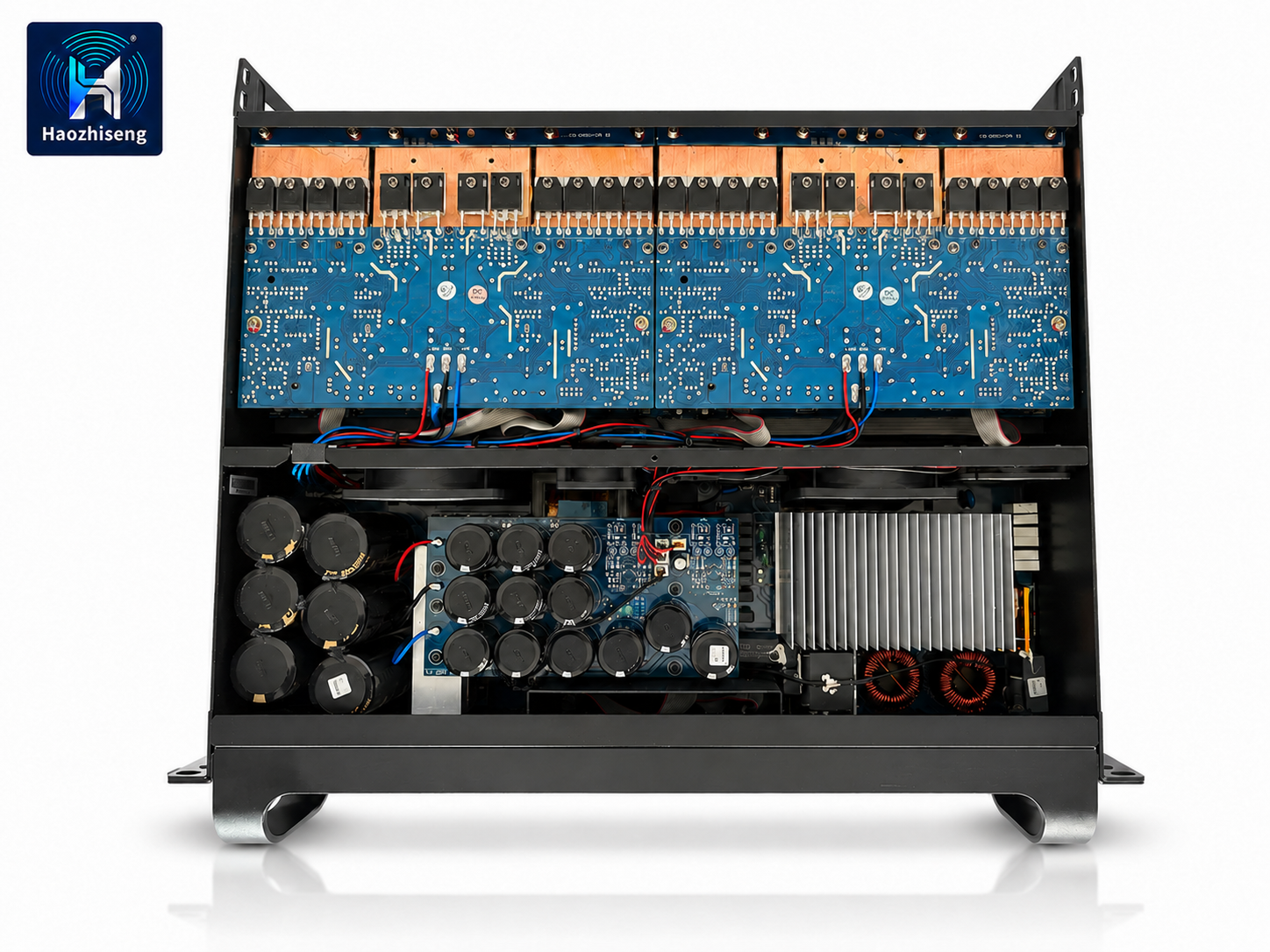
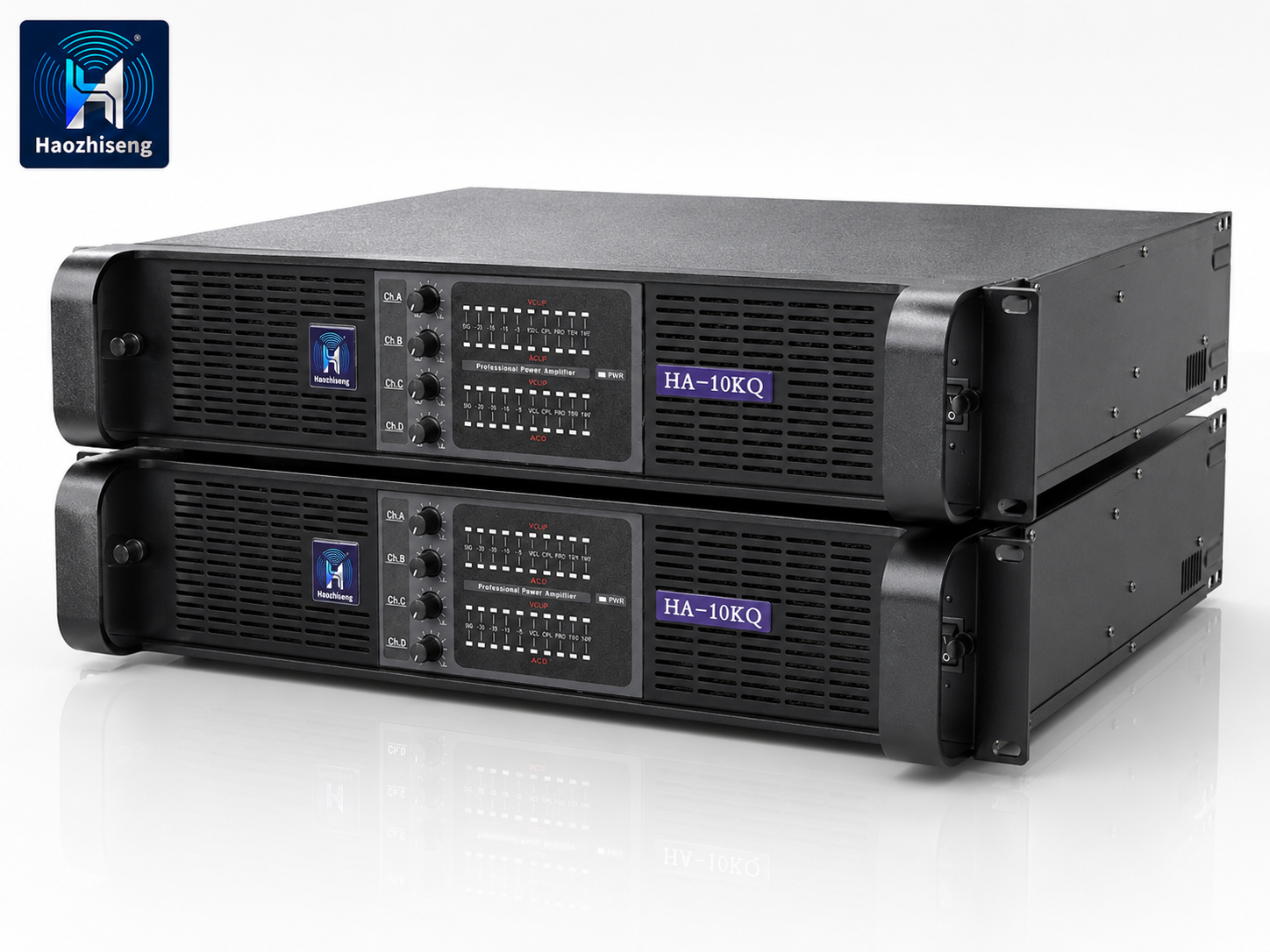
The HA10KQ combines four-channel flexibility with strong low-impedance driving capability. Its Class TD topology is suitable for professional users who require high output, dynamic sound and dependable performance in rental or fixed-installation systems.
Power Output:
- 4 × 1350W at 8Ω
- 4 × 2100W at 4Ω
- 4 × 2500W at 2Ω
Recommended Applications:
Full-range loudspeakers, stage monitors, medium-to-large PA systems, rental companies, clubs and fixed installations.
2. HA20K Four-Channel High-Power Amplifier
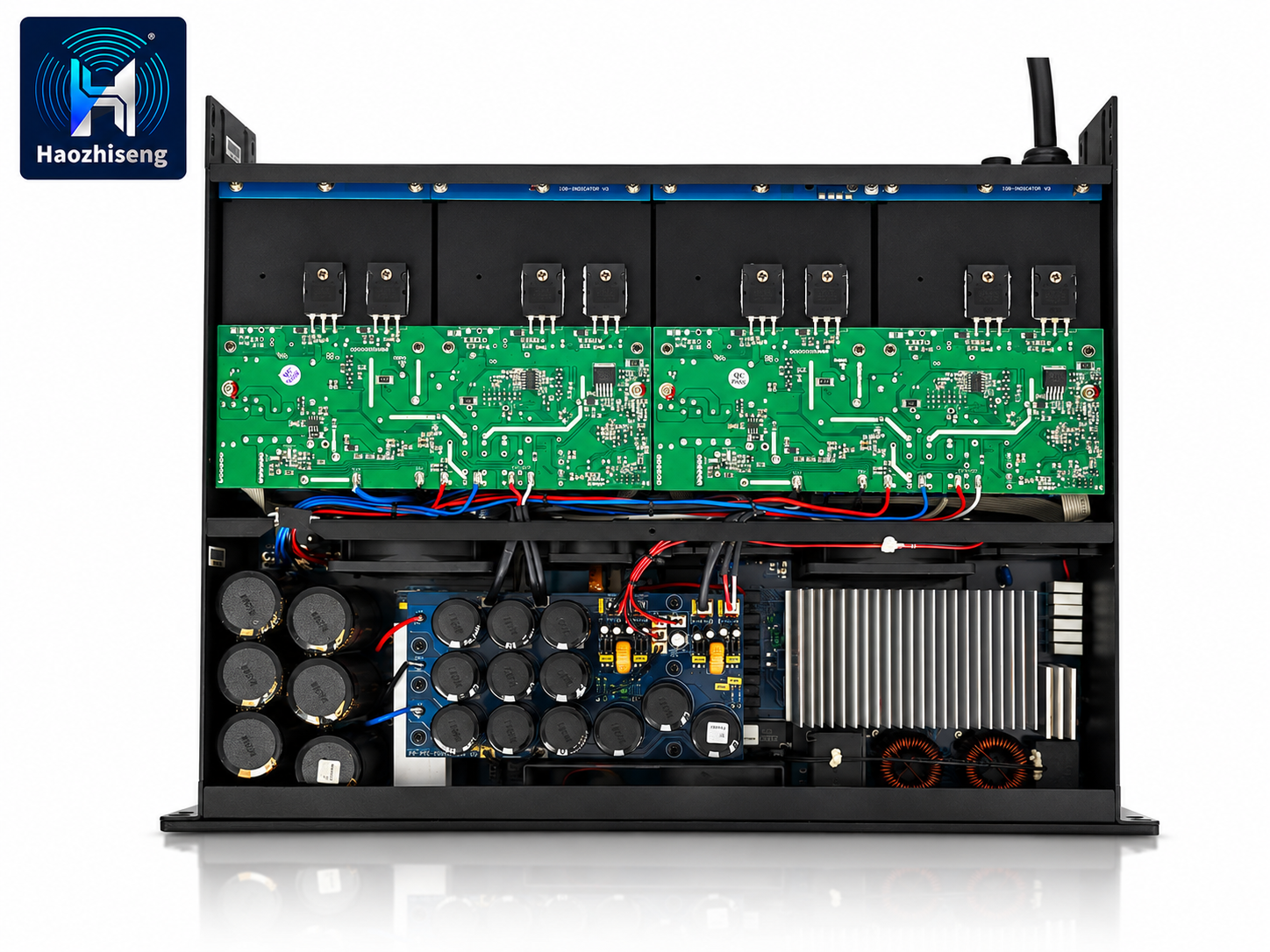
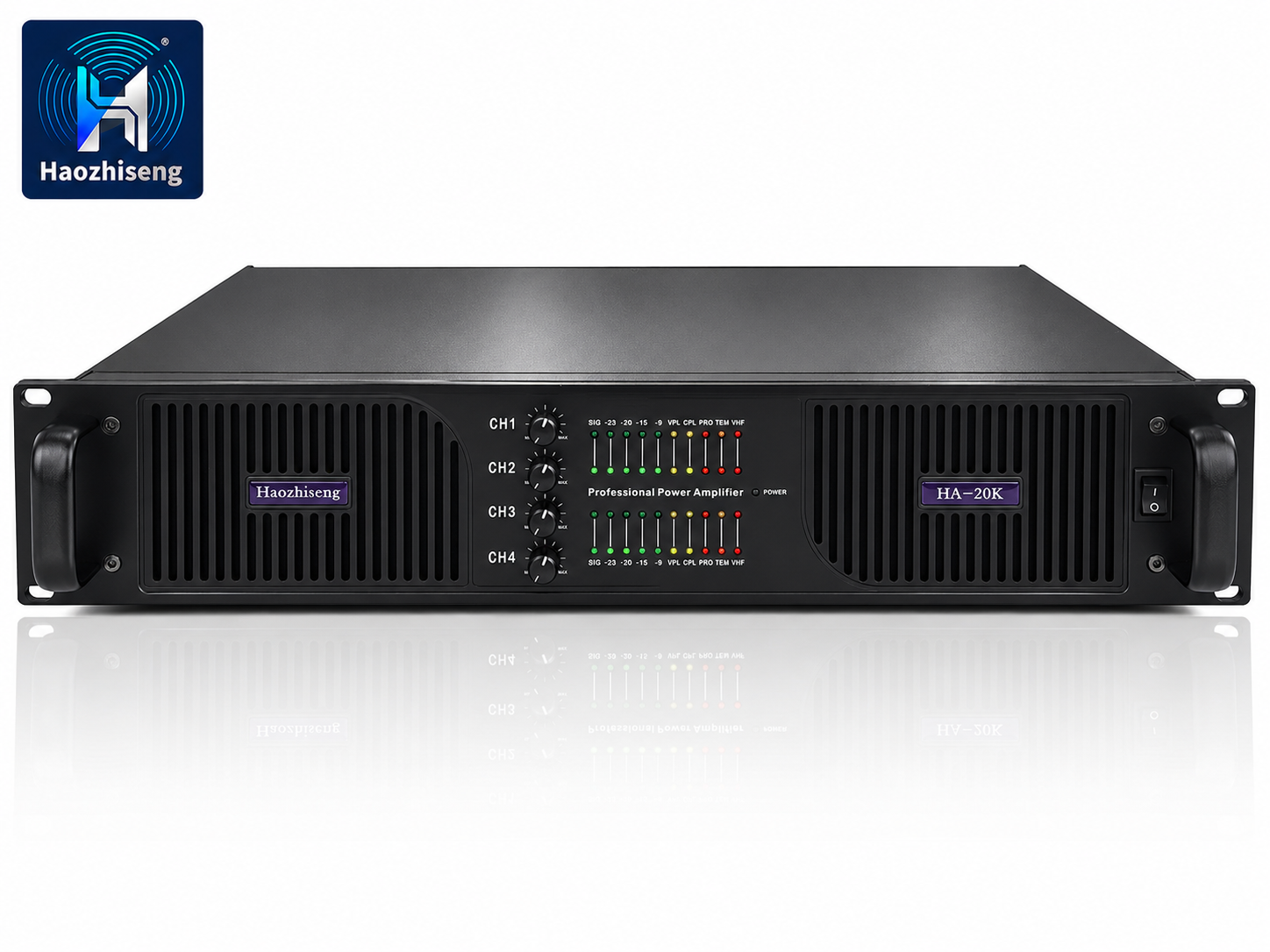
The HA20K is designed for professional systems requiring powerful four-channel output for line arrays, full-range loudspeakers or low-frequency sections.
Its PFC power platform helps improve mains utilization and operating stability in demanding multi-amplifier systems.
Power Output:
- 4 × 2100W at 8Ω
- 4 × 4000W at 4Ω
Recommended Applications:
Line-array systems, large live events, nightclubs, theaters, houses of worship, rental systems and fixed installations.
3. HAX12 PRO 12,000W Four-Channel Class D DSP Professional Power Amplifier
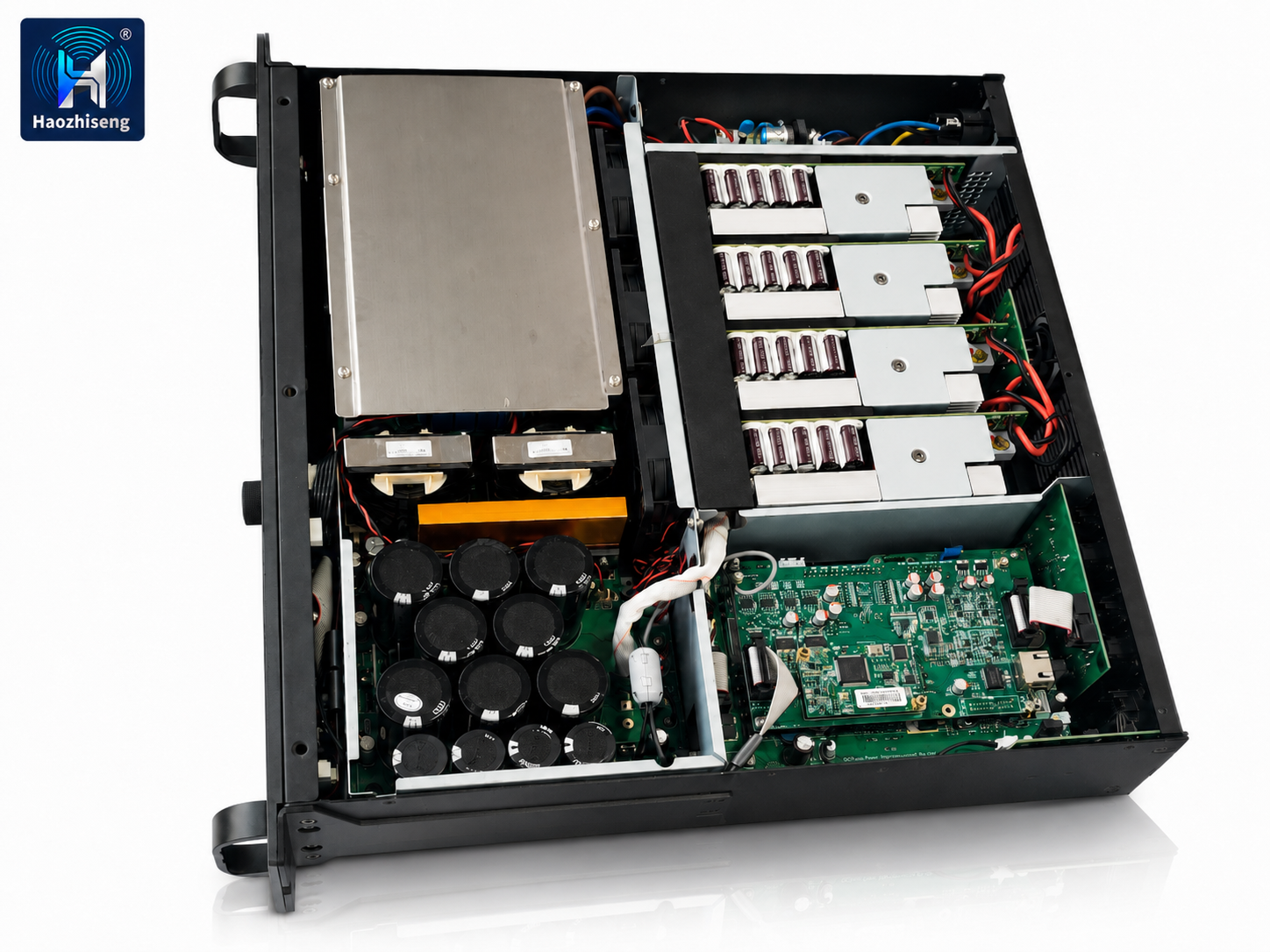
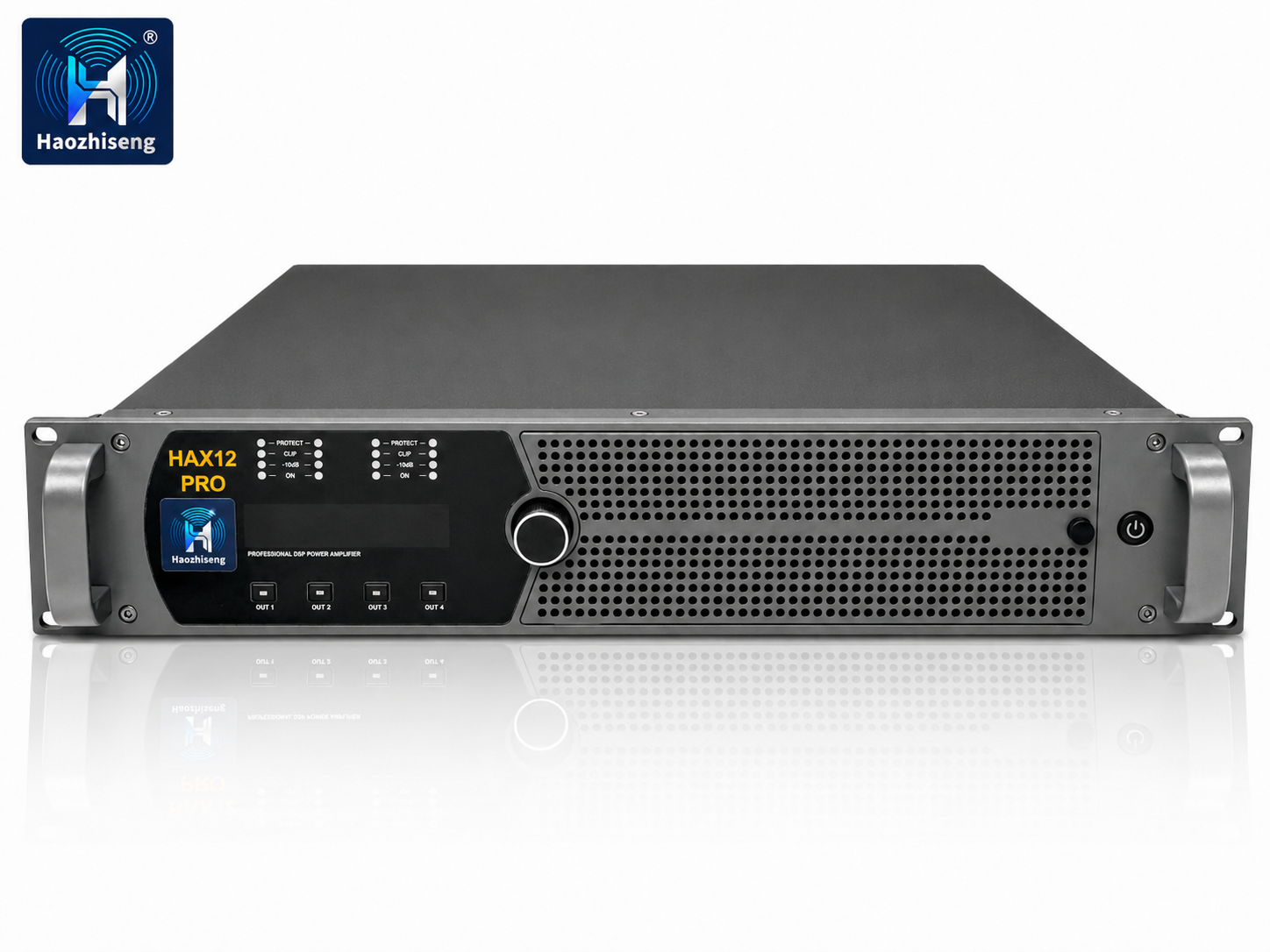
The HAX12 PRO integrates high-output Class D amplification, professional DSP processing and Ethernet network control in one platform.
Delivering up to 12,000 watts of total output at 2 ohms, it provides a compact and intelligent solution for professional PA systems that require both powerful amplification and precise loudspeaker management.
Key Specifications:
- 4 × 1500W at 8Ω
- 4 × 2800W at 4Ω
- 4 × 3000W at 2Ω
- 12,000W total output at 2Ω
- German DFM DSP platform
- Ethernet control for convenient system setup and monitoring
- PFC power supply
- 100–240V AC wide-voltage power supply
- High-efficiency cooling system
- Professional four-channel Class D design
The integrated DFM DSP and Ethernet control simplify system tuning, configuration and centralized management. Its 100–240V wide-voltage power supply makes the HAX12 PRO suitable for international markets, touring systems and mobile applications.
The high-efficiency cooling system supports stable performance during extended professional use.
Recommended Applications:
Touring systems, rental companies, line arrays, professional subwoofers, nightclubs, performance venues and DSP-controlled fixed installations.
4. HA1804 Four-Channel 1U Class D Power Amplifier
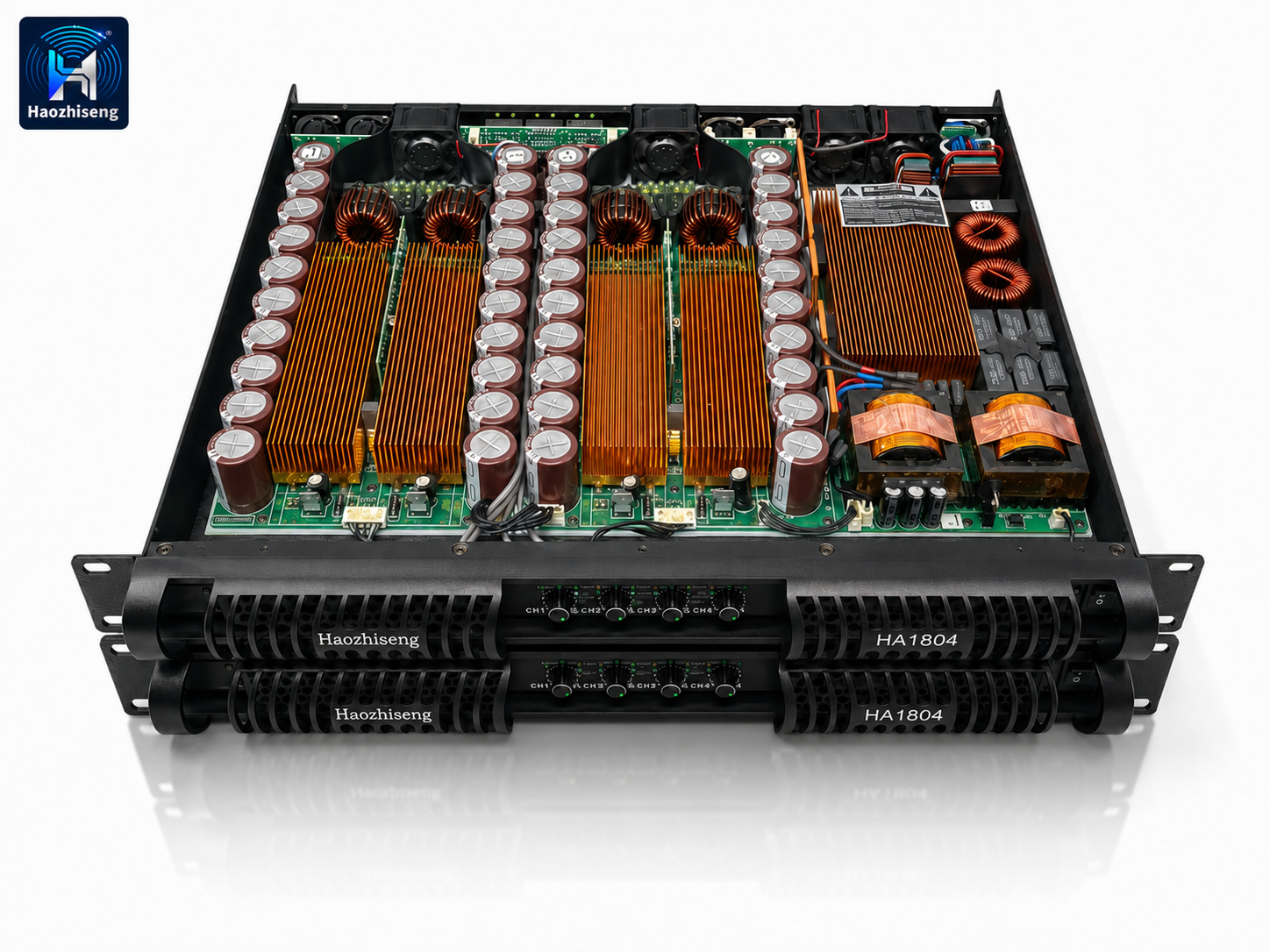
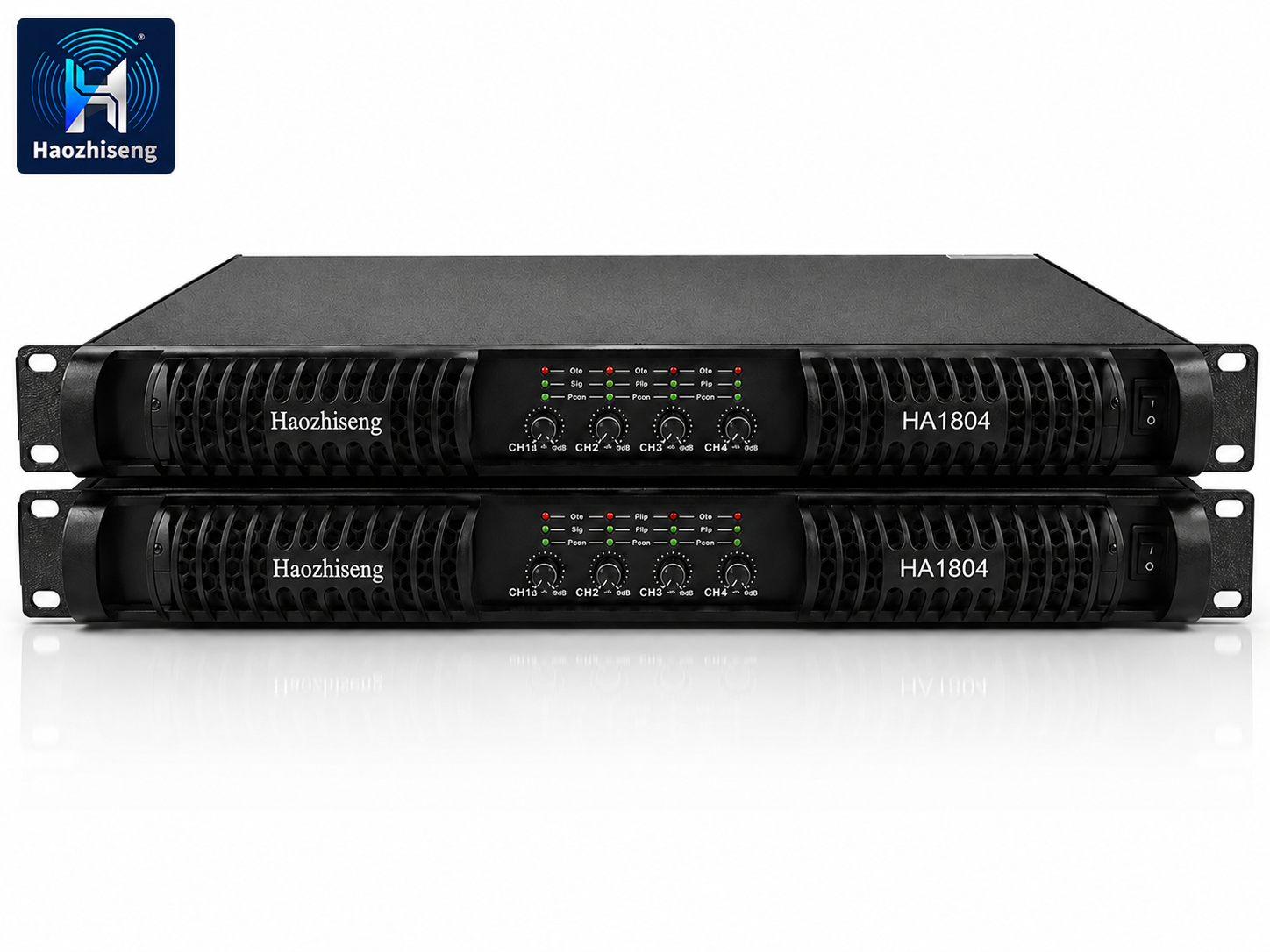
The HA1804 delivers powerful four-channel output from a compact 1U chassis. Its high power density reduces rack space and transportation weight, while the PFC wide-voltage power supply supports professional use across different regions and demanding power environments.
Key Specifications:
- 4 × 1800W at 8Ω
- 4 × 2800W at 4Ω
- 4 × 4500W at 2Ω
- PFC 90–260V AC wide-voltage power supply
- Compact 1U Class D design
- Stable low-impedance driving capability
- High-efficiency cooling system
Recommended Applications:
Touring racks, line-array systems, professional subwoofers, clubs, festivals, rental systems and large fixed installations.
5. HA32K4 26,800W Four-Channel Class D High-Power Subwoofer Amplifier
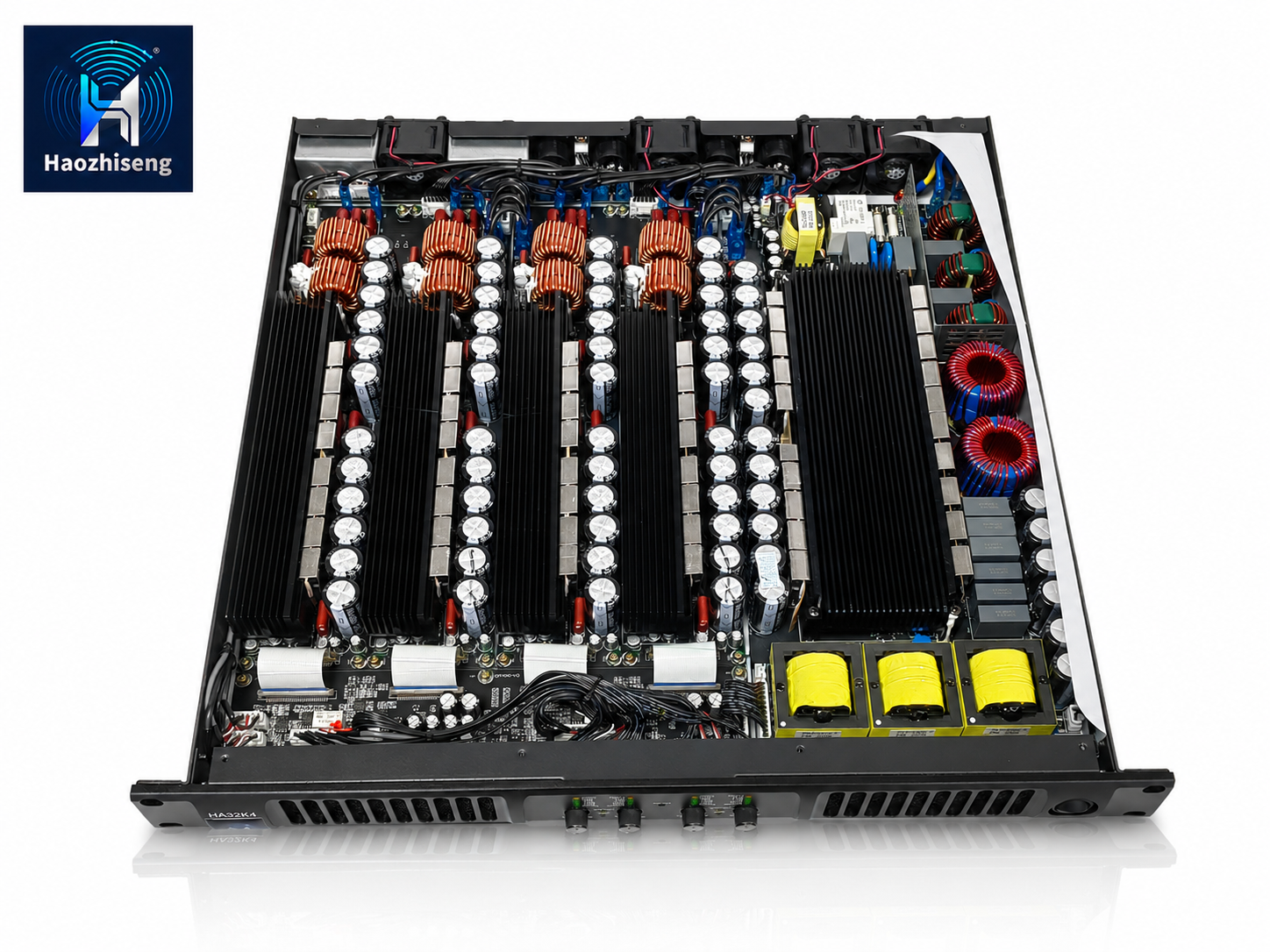
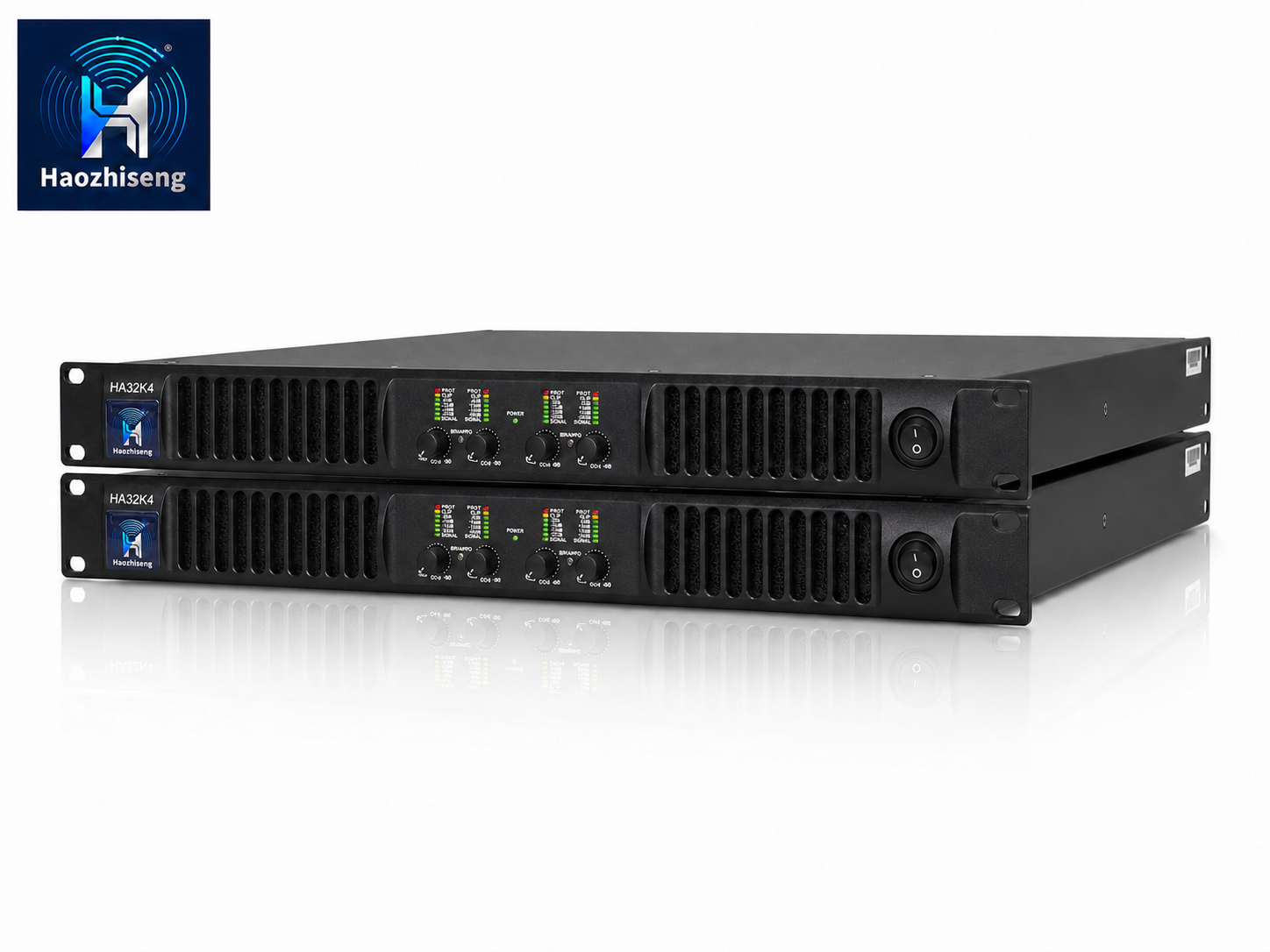
The HA32K4 is engineered for extremely demanding low-frequency applications.
Delivering up to 26,800 watts of total output at 2 ohms, it is designed for professional subwoofer systems requiring high current, long-term load stability and powerful low-frequency control.
Key Specifications:
- 4 × 3200W at 8Ω
- 4 × 5200W at 4Ω
- 4 × 6700W at 2Ω
- 26,800W total output at 2Ω
- Stable for long-term operation with 2.7Ω loads
- SiC MOSFET technology
- High efficiency and stable performance
- 90–265V AC wide-voltage power supply with PFC
- High-power output with high-fidelity audio performance
- Four-channel Class D amplifier design
SiC MOSFET technology supports fast switching, high efficiency and reliable high-power operation. Its ability to operate continuously with 2.7-ohm loads makes the HA32K4 especially suitable for demanding professional subwoofer configurations.
The 90–265V AC PFC wide-voltage power supply improves global voltage compatibility and helps the amplifier adapt to different electrical environments.
Recommended Applications:
Dual-woofer subwoofers, large-format bass systems, stadiums, outdoor festivals, concerts, touring productions, nightclubs and professional rental companies.
6. HA2402 Two-Channel 1U High-Power Amplifier
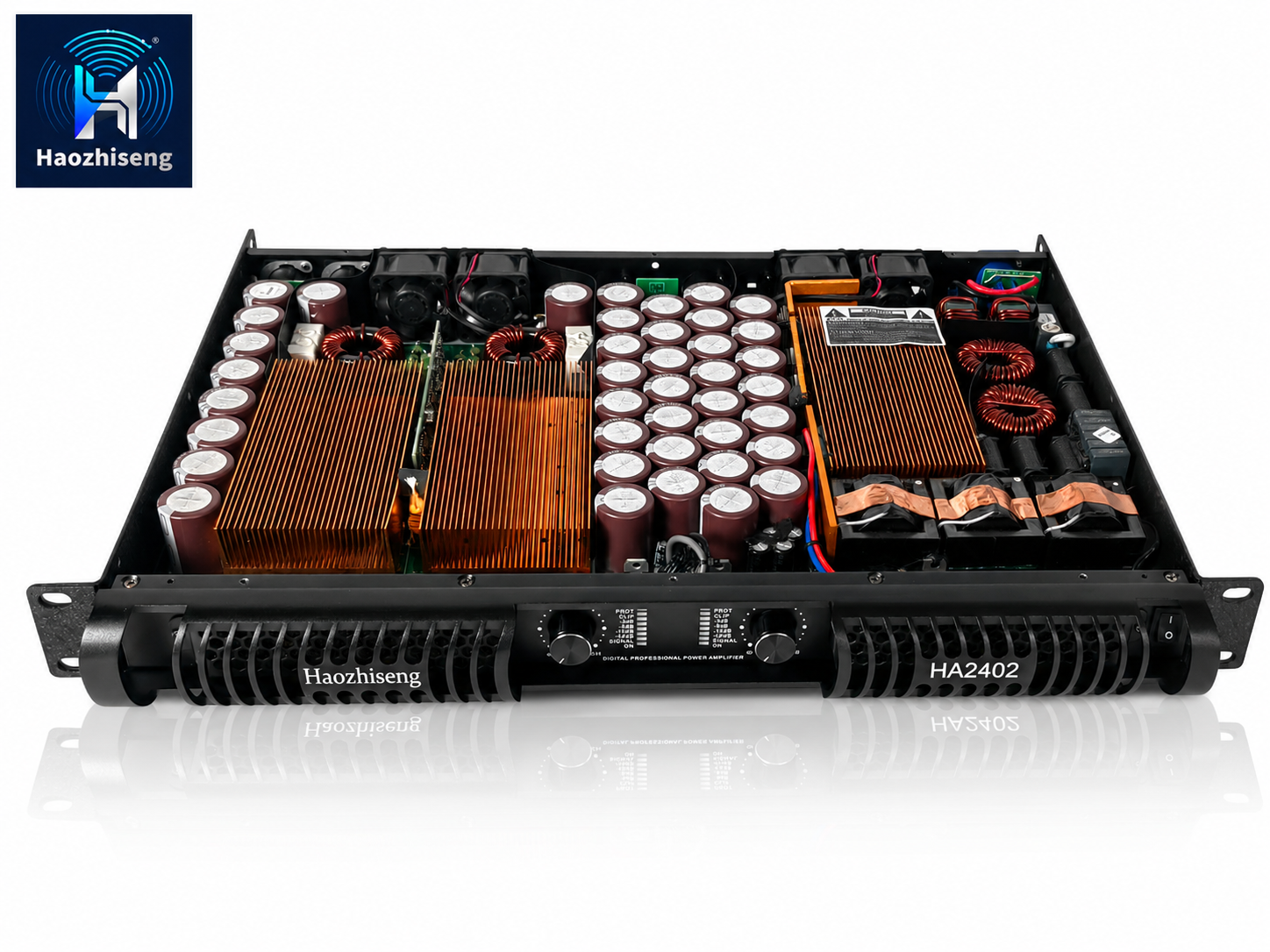
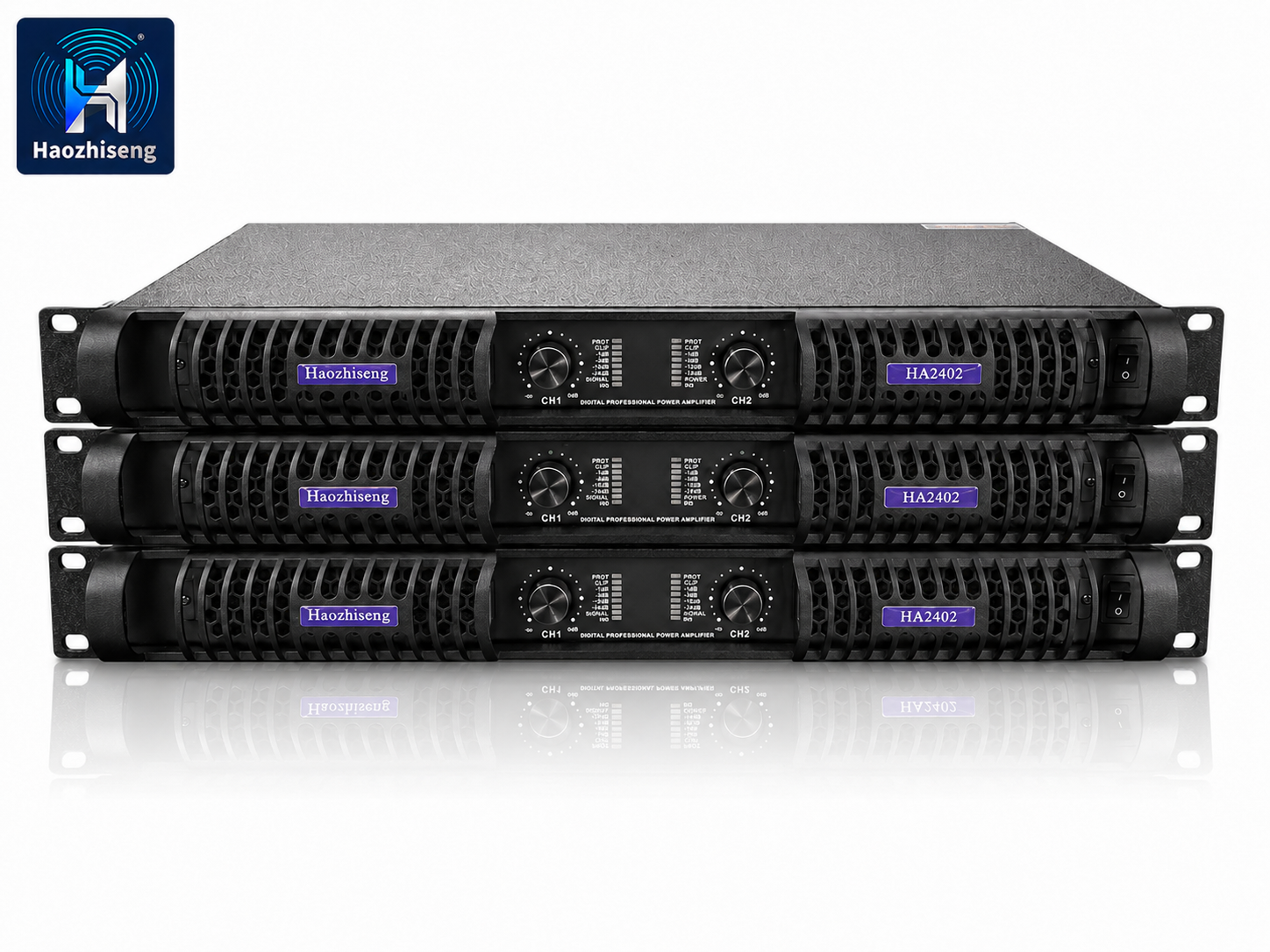
The HA2402 is a compact two-channel amplifier designed for applications requiring concentrated power and strong low-impedance performance.
Its 1U format helps system designers build smaller, lighter and more powerful amplifier racks.
Power Output:
- 2 × 2400W at 8Ω
- 2 × 4100W at 4Ω
- 2 × 6300W at 2Ω
Additional Advantages:
- Stable operation at 2Ω
- PFC power supply
- Compact 1U chassis
- High-efficiency cooling system
- Strong low-frequency driving capability
Recommended Applications:
Professional subwoofers, dual-woofer cabinets, high-output PA systems, touring, rental, nightclubs and fixed installations.
Frequently Asked Questions
Does PFC Improve Sound Quality?
PFC does not directly process or change the audio signal. Its primary role is to improve how the amplifier draws power from the AC mains.
However, a stable and efficiently utilized power supply can reduce shutdowns, restarts and performance limitations caused by inadequate electrical conditions, improving the overall reliability of the sound system.
Does a PFC Amplifier Consume Less Electricity?
PFC reduces reactive current and can lower losses in cables and power-distribution equipment. However, it does not necessarily create a dramatic reduction in the amplifier’s actual energy consumption.
Overall efficiency also depends on the amplifier topology, power-supply efficiency, load impedance, output level and program material.
Is Every PFC Amplifier a Wide-Voltage Amplifier?
No. PFC and wide-voltage operation are separate design features, although they are often integrated into the same modern switch-mode power supply.
Always verify the rated AC input-voltage range of the specific amplifier model.
Does a Wide-Voltage Amplifier Deliver the Same Maximum Output at Every Input Voltage?
Not necessarily.
At lower mains voltages, more input current is required to produce the same output power. The available branch-circuit current, cable size and power-supply design can affect maximum continuous output.
Always refer to the amplifier specifications and use correctly rated power-distribution equipment.
Can a PFC Amplifier Be Used with a Generator?
Yes. PFC amplifiers are well suited to generator-powered applications because of their improved input-current characteristics.
However, the generator must still provide stable voltage, sufficient continuous capacity and adequate headroom for dynamic audio loads.
How to Choose the Right PFC Amplifier
Before selecting an amplifier, consider more than the headline wattage. Confirm the following information:
- Number of loudspeakers in the system
- Loudspeaker nominal impedance
- Loudspeaker wiring configuration
- Required power per channel
- Full-range, line-array, stage-monitor or subwoofer application
- Local mains voltage
- Available branch-circuit current
- Generator capacity for mobile or outdoor use
- Required DSP and network-control functions
- Available rack space
- Cooling and transportation requirements
Correct amplifier matching and power-distribution design are essential for safe, stable and high-performance operation.
Conclusion
The future of professional amplification is not only about producing more watts. It is about delivering high output more efficiently, reliably and flexibly under real-world operating conditions.
PFC and wide-voltage power supplies help solve practical problems related to international voltage standards, unstable mains power, generators, long cables, inventory management, rack space and high-power system deployment.
As professional PA systems become more powerful, compact and global, these technologies will play an increasingly important role.
Haozhiseng Audio offers PFC amplifier solutions ranging from multi-channel full-range amplification to extreme-output professional subwoofer systems.
The HA10KQ, HA20K, HAX12 PRO, HA1804, HA32K4 and HA2402 provide different combinations of output power, channel configuration, DSP control, voltage flexibility and low-impedance driving capability.
Need help selecting the right amplifier for your loudspeakers or project?
Send us your loudspeaker quantity, impedance, rated power, wiring plan, application and local mains voltage. Our team will recommend a suitable amplifier and system configuration.
Haozhiseng Audio
Website: www.hzsaudio.com
Email: [email protected]
If this article helped you understand PFC, share it with another audio professional. Reliable sound starts with reliable power.
Leave a Reply